
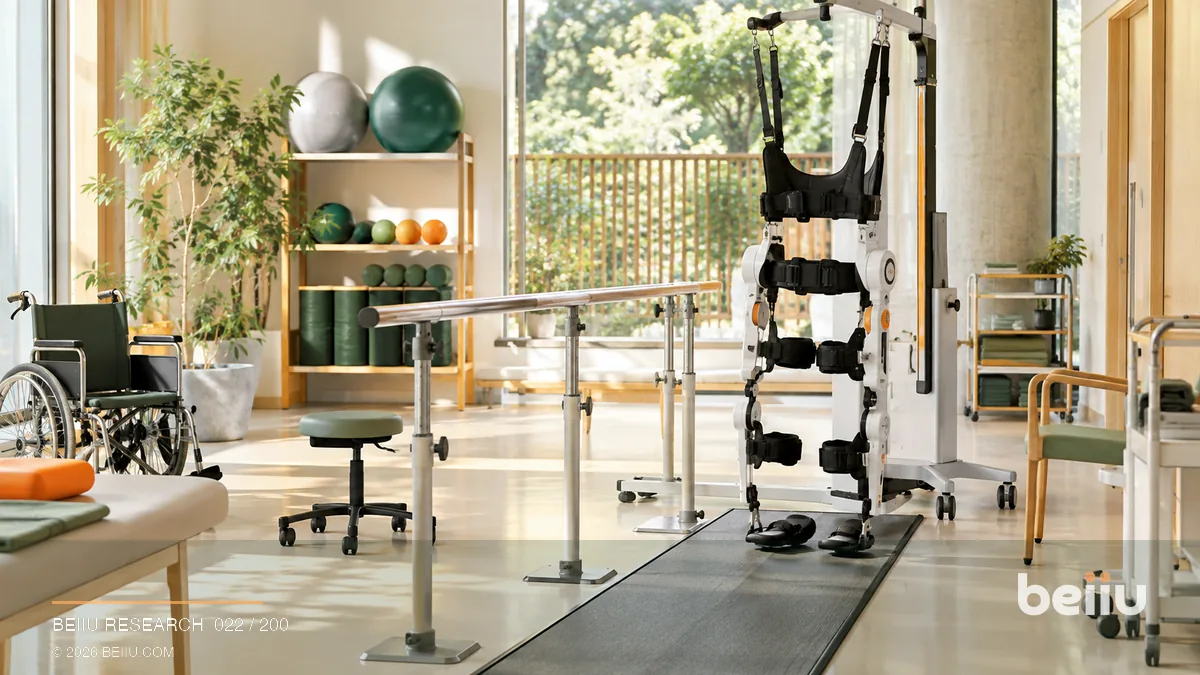
How Rehabilitation Robots Provide Just-Right Assistance
Both excessive and insufficient assistance can affect training outcomes
Conclusion: Devices should adjust support based on changing abilities and provide feedback for therapist interpretation
The question is how mobility becomes real social participation
Japan views mobility as a condition for maintaining social participation, with technology covering training, walking assistance, personal mobility devices, and accessible routes. Effective solutions must enhance accessibility rather than merely improving laboratory parameters.
“Both excessive and insufficient assistance can affect training outcomes” is a proposition that evidence may support or overturn, not a conclusion established because a Japanese case exists. For how mobility becomes real social participation, the analysis also tests “Devices should adjust support based on changing abilities and provide feedback for therapist interpretation” while retaining population, setting, period, failed cases and the current non-technical alternative.
What each source can and cannot establish
A source can establish the policy context of “Both excessive and insufficient assistance can affect training outcomes” without establishing a user outcome, so institutional fact, case fact, editorial inference and testable hypothesis remain separate.
- 01Japan Ministry of Health, Labour and Welfare: Priority Fields for Care Technology ↗
Confirms the official categories and definitions of priority care technologies; inclusion does not prove every product effective.
- 02World Health Organization: Integrated care for older people (ICOPE) ↗
Supports person-centred assessment, continuity of care and integrated community-level services.
- 03World Health Organization: Global Network for Age-friendly Cities and Communities ↗
Supports evaluating health, transport, housing, participation and public services as one community system.
- 04Cabinet Office of Japan: Annual Report on the Ageing Society 2025 ↗
Provides the demographic, living, employment, health and participation context for Japan’s ageing society.
Move from a feature to a complete accountability chain
Rehabilitation robots should provide just enough assistance while preserving active effort and adapting to ability. Evaluate dose, independent movement, fatigue, compensation and transfer to daily life rather than repetition count. Mobility value is not device distance. It is whether a person can leave home, turn, climb a slope, cross, wait, transfer, park, toilet and return, with safe exit under fatigue or failure.
For “Both excessive and insufficient assistance can affect training outcomes”, actively seek the counterexample “testing the device while ignoring the complete journey”. When it occurs, preserve current service and personal choice before locating where “Devices should adjust support based on changing abilities and provide feedback for therapist interpretation” failed in requirements, product, operation or response.
Place the argument inside one observable task
Complete a real round trip with the person’s usual aid, logging surface, gradient, turning, braking, range, waiting, help, fatigue and near misses segment by segment before comparing assistance. For this analysis, also record “journey completion”, “requests for help” and the non-technical method so that “Devices should adjust support based on changing abilities and provide feedback for therapist interpretation” can be attributed to the intervention rather than hidden support.
Success is not a completed demonstration. “Both excessive and insufficient assistance can affect training outcomes” must remain understandable, interruptible and closable across routine, exception and unavailable states.
Transfer operating method and evidence discipline
Japan places walking, rehabilitation, station service and personal mobility within social participation, returning product performance to the complete journey.
Redraw accountability before selecting product form
Chinese road density, mixed traffic, lift size, community access and traffic rules require route-level and regulatory revalidation. Road environments, regulations, and public transport conditions significantly impact product implementation; overseas cases must undergo re-validation of scenarios and compliance.
Use consistent measures across routine, exception and unavailable conditions
- 01journey completion
Review the work and waiting time carried by users, therapists, families, operators and public-space managers around “journey completion”. Improvement in “Devices should adjust support based on changing abilities and provide feedback for therapist interpretation” that depends on permanent extra labour cannot be attributed to the intervention alone.
- 02requests for help
“requests for help” must include exceptions, refusal and unavailable-system cases. While testing “Both excessive and insufficient assistance can affect training outcomes”, testing the device while ignoring the complete journey means an improved average still triggers pause or reframing.
- 03fatigue
Compare “fatigue” with the same task, population, version and response rule. A material version change in this analysis requires a new baseline.
- 04near misses
For “near misses”, state the population, baseline and time window in this analysis, and retain “life-space” so one attractive metric cannot conceal deterioration elsewhere.
- 05life-space
“life-space” helps answer how mobility becomes real social participation. For “Both excessive and insufficient assistance can affect training outcomes”, keep device output, human confirmation and completed action separate, and investigate when the three disagree.
For “Both excessive and insufficient assistance can affect training outcomes”, the period for “journey completion” and “requests for help” covers weekends, nights, visitors, shift or environmental change. If “Devices should adjust support based on changing abilities and provide feedback for therapist interpretation” has health, safety or cognitive implications, it also requires predefined human review, professional referral and exclusion criteria.
Keep the conditions behind the decision traceable
Topic record: For “Both excessive and insufficient assistance can affect training outcomes”, treat “Devices should adjust support based on changing abilities and provide feedback for therapist interpretation” as a judgment that field evidence may support or overturn.
Baseline record: Testing “Both excessive and insufficient assistance can affect training outcomes” retains population, task frequency, current method, elapsed time, help, near misses and non-completion; journey completion and requests for help use one denominator and period around “Devices should adjust support based on changing abilities and provide feedback for therapist interpretation”, including refusal and failed cases.
Ownership record: Around “Both excessive and insufficient assistance can affect training outcomes”, users, therapists, families, operators and public-space managers receive distinct duties for choice, operation, confirmation, maintenance, payment and stop authority; every action testing “Devices should adjust support based on changing abilities and provide feedback for therapist interpretation” names an owner, deadline and fallback.
Exception-closure record: “Both excessive and insufficient assistance can affect training outcomes” predefines “testing the device while ignoring the complete journey” as a failed case and retains preceding conditions, version, human takeover, recovery time and impact; closure requires recovery of the life task behind “Devices should adjust support based on changing abilities and provide feedback for therapist interpretation” and human confirmation.
Change and exit record: After a change in threshold, place, people, shift, connectivity or service resources affecting “Both excessive and insufficient assistance can affect training outcomes”, retain the reason, approver, new baseline and grounds under “Devices should adjust support based on changing abilities and provide feedback for therapist interpretation” for continuation, downgrade or exit.
Decision rationale: Continue, modify or stop decisions around “Both excessive and insufficient assistance can affect training outcomes” cite source records, show how fatigue and near misses support “Devices should adjust support based on changing abilities and provide feedback for therapist interpretation”, and retain unresolved uncertainty.
Review cadence: At pilot entry, first exception, version change and before scale, reassess “Devices should adjust support based on changing abilities and provide feedback for therapist interpretation” and compare journey completion, requests for help, fatigue, near misses, life-space under unchanged definitions.
Know when not to adopt and when to stop
Do not claim independent mobility when assistance creates over-trust, handover cannot be managed, braking or turning does not fit the route, or completion still requires a companion. Retain a lower-technology, lower-burden and reversible alternative.
Five checks before procurement, pilots or partnerships
Population and task
For “Both excessive and insufficient assistance can affect training outcomes”, define who completes which task in what setting and retain the current non-technical alternative so the proposition becomes testable.
Ownership and time
Around “Devices should adjust support based on changing abilities and provide feedback for therapist interpretation”, name receipt, confirmation, action, maintenance and stop ownership across users, therapists, families, operators and public-space managers, including escalation and takeover deadlines.
Evidence threshold
To test “Both excessive and insufficient assistance can affect training outcomes”, track journey completion, requests for help, fatigue, near misses, life-space together, retaining denominator, period, version change, refusal and incomplete cases.
Counterexample and failure
Actively test when testing the device while ignoring the complete journey occurs and whether it overturns the operating conditions behind “Devices should adjust support based on changing abilities and provide feedback for therapist interpretation”.
Exit and review
When preference, ability, housing, household or service access changes, allow “Both excessive and insufficient assistance can affect training outcomes” to reduce automation, change rules or exit, then reassess how mobility becomes real social participation.
Turn overseas experience into local methods
For BEIIU / 辈佑, “Devices should adjust support based on changing abilities and provide feedback for therapist interpretation” becomes useful when it leads to clearer requirements, evaluation methods, accountability and exit conditions in product and partnership practice.
References
Institutional facts, corporate material, case descriptions and BEIIU interpretation remain separate. Original-publisher links allow readers to check year, population and scope.
- Japan Ministry of Health, Labour and Welfare: Priority Fields for Care Technology ↗
- World Health Organization: Integrated care for older people (ICOPE) ↗
- World Health Organization: Global Network for Age-friendly Cities and Communities ↗
- Cabinet Office of Japan: Annual Report on the Ageing Society 2025 ↗