
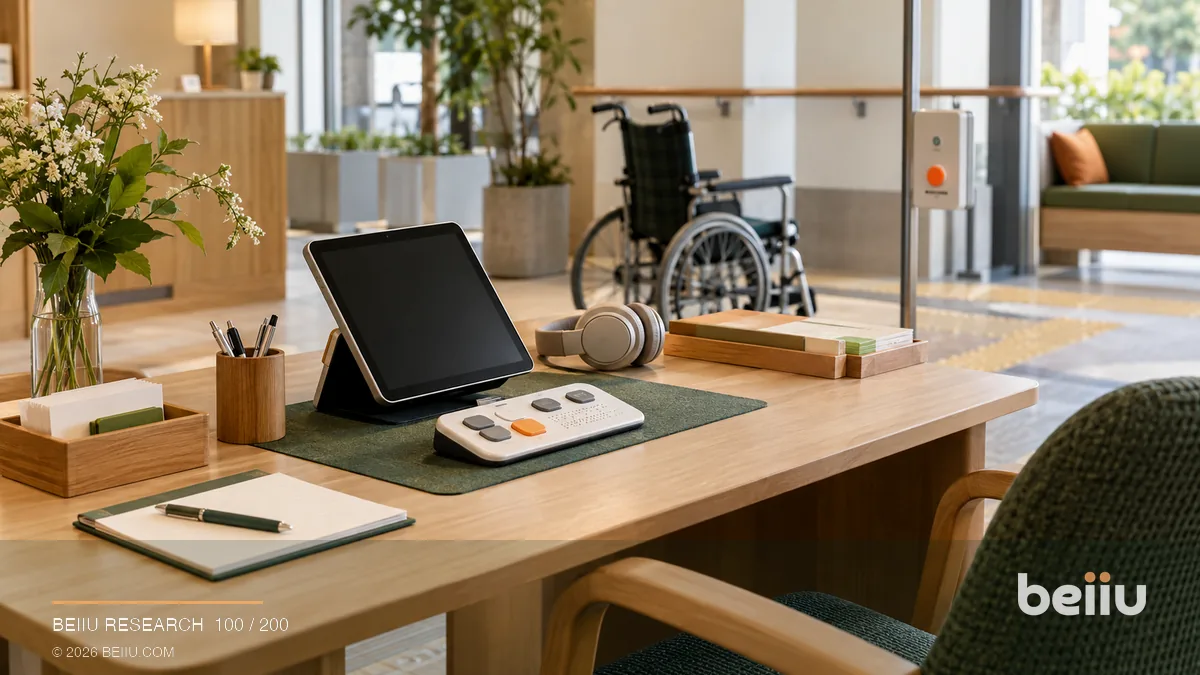
Minimum Standards for BEIIU Age-Friendly Interaction
Understandable, reversible, assistable, and recoverable
Conclusion: BEIIU products should not require elders to become technology experts first
The question is how the system absorbs cognitive and operational burden
Japan's digital support policy explains that age-friendliness extends beyond interface design to include offline instruction, proxy assistance, trusted identity verification, and fault recovery. Good products allow users to learn at their own pace.
“Understandable, reversible, assistable, and recoverable” is a proposition that evidence may support or overturn, not a conclusion established because a Japanese case exists. For how the system absorbs cognitive and operational burden, the analysis also tests “BEIIU products should not require elders to become technology experts first” while retaining population, setting, period, failed cases and the current non-technical alternative.
What each source can and cannot establish
Government material establishes systems, definitions and direction, corporate material shows practice, and a case establishes existence only, so these roles cannot substitute for one another in “Understandable, reversible, assistable, and recoverable”.
- 01Japan Ministry of Internal Affairs and Communications: Digital Use Support Programme ↗
Supports examining how digital capability support enters offline service and real tasks rather than relying on interface changes alone.
- 02World Health Organization: Global Network for Age-friendly Cities and Communities ↗
Supports evaluating health, transport, housing, participation and public services as one community system.
- 03Cabinet Office of Japan: Annual Report on the Ageing Society 2025 ↗
Provides the demographic, living, employment, health and participation context for Japan’s ageing society.
- 04Japan Ministry of Health, Labour and Welfare: Promotion of Care Technology ↗
Supports analysis of how Japan links care-technology adoption, workflow improvement, productivity and care quality.
Move from a feature to a complete accountability chain
BEIIU’s minimum interaction standard is first-use comprehension, reversible critical action, recoverable failure and reachable human help. If ongoing family operation is required, call it a family-coordination tool rather than claiming independent older-person use. Digital inclusion covers discovery, identity, comprehension, action, confirmation, recovery, proxy use and help. Large type addresses only one visual component.
For “Understandable, reversible, assistable, and recoverable”, actively seek the counterexample “treating large type as complete age-friendly design”. When it occurs, preserve current service and personal choice before locating where “BEIIU products should not require elders to become technology experts first” failed in requirements, product, operation or response.
Place the argument inside one observable task
Ask users with different abilities to complete login, verification, payment or settings without prompting; record pause, backtrack, error, help, abandonment and recovery before voice or proxy support. For this analysis, also record “independent completion”, “error recovery” and the non-technical method so that “BEIIU products should not require elders to become technology experts first” can be attributed to the intervention rather than hidden support.
Success is not a completed demonstration. “Understandable, reversible, assistable, and recoverable” must remain understandable, interruptible and closable across routine, exception and unavailable states.
Transfer operating method and evidence discipline
Japan’s digital-use support shows that offline teaching, trusted assistance and real-task practice matter as much as interface.
Redraw accountability before selecting product form
Chinese super-app, QR, identity, verification and payment risk controls require bounded proxy access, non-smartphone or human channels and fraud-aware confirmation. China's super-apps and QR code scenarios are highly concentrated; special attention must be given to boundaries regarding accounts, verification codes, payments, and family proxy operations.
Use consistent measures across routine, exception and unavailable conditions
- 01independent completion
For “independent completion”, state the population, baseline and time window in this analysis, and retain “error recovery” so one attractive metric cannot conceal deterioration elsewhere.
- 02error recovery
“error recovery” helps answer how the system absorbs cognitive and operational burden. For “Understandable, reversible, assistable, and recoverable”, keep device output, human confirmation and completed action separate, and investigate when the three disagree.
- 03help requests
Review the work and waiting time carried by older people, families, support, product and risk teams around “help requests”. Improvement in “BEIIU products should not require elders to become technology experts first” that depends on permanent extra labour cannot be attributed to the intervention alone.
- 04fraud controls
“fraud controls” must include exceptions, refusal and unavailable-system cases. While testing “Understandable, reversible, assistable, and recoverable”, treating large type as complete age-friendly design means an improved average still triggers pause or reframing.
- 05abandonment
Compare “abandonment” with the same task, population, version and response rule. A material version change in this analysis requires a new baseline.
For “Understandable, reversible, assistable, and recoverable”, the period for “independent completion” and “error recovery” covers weekends, nights, visitors, shift or environmental change. If “BEIIU products should not require elders to become technology experts first” has health, safety or cognitive implications, it also requires predefined human review, professional referral and exclusion criteria.
Keep the conditions behind the decision traceable
Topic record: For “Understandable, reversible, assistable, and recoverable”, treat “BEIIU products should not require elders to become technology experts first” as a judgment that field evidence may support or overturn.
Baseline record: Testing “Understandable, reversible, assistable, and recoverable” retains population, task frequency, current method, elapsed time, help, near misses and non-completion; independent completion and error recovery use one denominator and period around “BEIIU products should not require elders to become technology experts first”, including refusal and failed cases.
Ownership record: Around “Understandable, reversible, assistable, and recoverable”, older people, families, support, product and risk teams receive distinct duties for choice, operation, confirmation, maintenance, payment and stop authority; every action testing “BEIIU products should not require elders to become technology experts first” names an owner, deadline and fallback.
Exception-closure record: “Understandable, reversible, assistable, and recoverable” predefines “treating large type as complete age-friendly design” as a failed case and retains preceding conditions, version, human takeover, recovery time and impact; closure requires recovery of the life task behind “BEIIU products should not require elders to become technology experts first” and human confirmation.
Change and exit record: After a change in threshold, place, people, shift, connectivity or service resources affecting “Understandable, reversible, assistable, and recoverable”, retain the reason, approver, new baseline and grounds under “BEIIU products should not require elders to become technology experts first” for continuation, downgrade or exit.
Decision rationale: Continue, modify or stop decisions around “Understandable, reversible, assistable, and recoverable” cite source records, show how help requests and fraud controls support “BEIIU products should not require elders to become technology experts first”, and retain unresolved uncertainty.
Review cadence: At pilot entry, first exception, version change and before scale, reassess “BEIIU products should not require elders to become technology experts first” and compare independent completion, error recovery, help requests, fraud controls, abandonment under unchanged definitions.
Know when not to adopt and when to stop
The flow fails when security blocks the target user, proxy access cannot be revoked, voice lacks visible confirmation, or only customer support can recover an error. Retain a lower-technology, lower-burden and reversible alternative.
Five checks before procurement, pilots or partnerships
Population and task
For “Understandable, reversible, assistable, and recoverable”, define who completes which task in what setting and retain the current non-technical alternative so the proposition becomes testable.
Ownership and time
Around “BEIIU products should not require elders to become technology experts first”, name receipt, confirmation, action, maintenance and stop ownership across older people, families, support, product and risk teams, including escalation and takeover deadlines.
Evidence threshold
To test “Understandable, reversible, assistable, and recoverable”, track independent completion, error recovery, help requests, fraud controls, abandonment together, retaining denominator, period, version change, refusal and incomplete cases.
Counterexample and failure
Actively test when treating large type as complete age-friendly design occurs and whether it overturns the operating conditions behind “BEIIU products should not require elders to become technology experts first”.
Exit and review
When preference, ability, housing, household or service access changes, allow “Understandable, reversible, assistable, and recoverable” to reduce automation, change rules or exit, then reassess how the system absorbs cognitive and operational burden.
Turn overseas experience into local methods
For BEIIU / 辈佑, “BEIIU products should not require elders to become technology experts first” becomes useful when it leads to clearer requirements, evaluation methods, accountability and exit conditions in product and partnership practice.
References
Institutional facts, corporate material, case descriptions and BEIIU interpretation remain separate. Original-publisher links allow readers to check year, population and scope.
- Japan Ministry of Internal Affairs and Communications: Digital Use Support Programme ↗
- World Health Organization: Global Network for Age-friendly Cities and Communities ↗
- Cabinet Office of Japan: Annual Report on the Ageing Society 2025 ↗
- Japan Ministry of Health, Labour and Welfare: Promotion of Care Technology ↗