
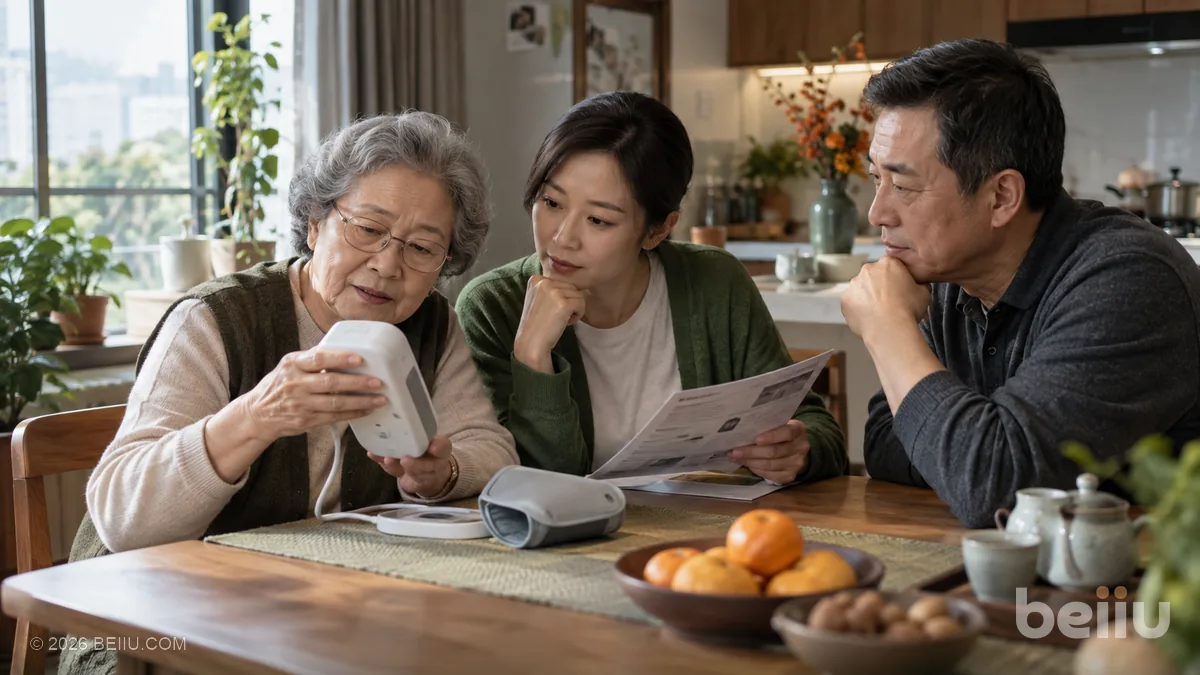
Why Adult Children Often Make the Purchase Decision
The user and buyer are often different people
Conclusion: The value of silver technology must be tested in real life: does it respect the person, reduce the family’s burden and remain reliable at the critical moment?
Begin with everyday life
The correct unit of analysis is not age or a product category. It is the life task that still has to be completed as ability, housing, relationships and service access change. Demand depends on frequency, substitution cost, payment roles, delivery radius and the capacity to support use over time.
The article uses “The user and buyer are often different people” to examine product, family and service implications. Start with one frequent life task whose failure matters, observe the existing method through a complete use cycle, and test a minimum deliverable against adoption, payment and service ownership. Without actual payment, repeat use or a responsibility loop, the opportunity remains a hypothesis.
The user and buyer are often different people
For health, safety and care products, a need is frequently shared across the family. The older adult uses the product, while an adult child researches brands, compares options, pays, configures devices and manages support. In families living apart, children may feel the risk more intensely than their parents. A product therefore serves at least two sets of goals. Older adults value simplicity, dignity and low disruption. Their children value reliability, visibility and timely notification when something is genuinely wrong.
To turn “The user and buyer are often different people” into a reviewable judgment, decompose demand into a life task, frequency, current alternative, payer and delivery radius rather than treating the size of an age cohort as demand. When evaluating “The user and buyer are often different people”, use households or institutions entering the target context as the denominator and separate problem occurrence, help seeking, purchase and continued use, and if field evidence contradicts “The user and buyer are often different people”, narrow the scope and amend requirements rather than removing the counterexample.
Adult children are purchasing certainty
Most families do not want to watch continuous data. They want to know that the system works, important routines are complete and a meaningful exception will reach them. Raw metrics without context can increase anxiety. “Activity is consistent with the usual pattern” is more helpful than an isolated step count. “Two medication confirmations were missed” is more actionable than another routine reminder.
To turn “Adult children are purchasing certainty” into a reviewable judgment, record benefits, burden and veto conditions separately for older people, adult children, institutions and service providers, because willingness to pay is not willingness to use. When evaluating “Adult children are purchasing certainty”, separate cash, time, anxiety and opportunity cost in the current alternative and identify who bears each cost, and if field evidence contradicts “The user and buyer are often different people”, narrow the scope and amend requirements rather than removing the counterexample.
A purchase does not guarantee adoption
An adult child may buy a device that an older parent does not keep using. Forced installation, frequent alerts, difficult charging and a sense of surveillance can quickly turn equipment into clutter. Good products support family agreement: what can be shared, which alerts stay local, who receives an emergency notification first, and how the older adult can understand or change the system state.
To turn “A purchase does not guarantee adoption” into a reviewable judgment, model hardware, recurring service, human support and after-sales liability as separate cost accounts, retaining reasons for non-purchase and discontinuation. When evaluating “A purchase does not guarantee adoption”, observe delivery, activation, 30/90-day use, service labour, returns and exit before claiming repeatability, and if field evidence contradicts “The user and buyer are often different people”, narrow the scope and amend requirements rather than removing the counterexample.
A brand must answer both generations
For older adults, the brand should communicate respect, simplicity and quality of life. For children, it should demonstrate reliability, responsibility and service capability. Fear is less persuasive than showing how a product remains quiet in daily life and useful at the critical moment. The foundation of a silver-economy brand is intergenerational trust: the older adult wants to use it, the child is willing to buy it, and the family sees enough value to keep it.
To turn “A brand must answer both generations” into a reviewable judgment, decompose demand into a life task, frequency, current alternative, payer and delivery radius rather than treating the size of an age cohort as demand. When evaluating “A brand must answer both generations”, use households or institutions entering the target context as the denominator and separate problem occurrence, help seeking, purchase and continued use, and if field evidence contradicts “The user and buyer are often different people”, narrow the scope and amend requirements rather than removing the counterexample.
Place the argument between public evidence and counterexamples
Industry assessment must separate trade-show interest from routine use. A concept can be easy to explain and still fail if the user, payer, installer, maintainer and accountable responder are not explicitly identified.
- General Office of the State Council: Guiding Opinion on the Silver Economy ↗
- World Health Organization: Ageing and health ↗
- State Administration for Market Regulation: GB/T 45272-2025 Guidelines for Age-Friendly Home Product Design ↗
- ISO: ISO 25550 Framework for Smart Multigenerational Neighbourhoods ↗
Together, these sources form the factual and methodological basis of the article. BEIIU considers regulation, public-health frameworks, design standards and real-world settings separately rather than asking one source to carry the whole conclusion.
Conditions that would overturn the thesis
- 01
turning population size directly into sales forecasts
- 02
treating one trial as evidence of durable demand
- 03
counting hardware margin while ignoring service cost
- 04
using policy direction as a substitute for procurement evidence
Stop expansion when the problem is infrequent, a lower-burden alternative is clearly better, acquisition and service cost persistently exceed attainable margin, or user and payer cannot establish durable authorization. Counterexamples belong in the argument and product decision, not only in a disclaimer.
Judge outcomes rather than feature count
- 01 · task completion
For “task completion”, use households or institutions entering the target context as the denominator and separate problem occurrence, help seeking, purchase and continued use. The “task completion” record also retains the period, version, incomplete and exception cases so an average cannot become an outcome claim detached from context.
- 02 · continued use
For “continued use”, separate cash, time, anxiety and opportunity cost in the current alternative and identify who bears each cost. The “continued use” record also retains the period, version, incomplete and exception cases so an average cannot become an outcome claim detached from context.
- 03 · burden change
For “burden change”, observe delivery, activation, 30/90-day use, service labour, returns and exit before claiming repeatability. The “burden change” record also retains the period, version, incomplete and exception cases so an average cannot become an outcome claim detached from context.
- 04 · user autonomy
For “user autonomy”, use households or institutions entering the target context as the denominator and separate problem occurrence, help seeking, purchase and continued use. The “user autonomy” record also retains the period, version, incomplete and exception cases so an average cannot become an outcome claim detached from context.
BEIIU / 辈佑 focuses on whether technology genuinely improves everyday life for older adults, reduces family burden and supports a clear response when it matters.
Turn research into better choices
Families can begin with the one task that most affects everyday life, then clarify who uses the solution, who supports it and who responds when something changes. Institutions and industry partners must also account for workflow, maintenance, privacy and lifecycle cost. A precise problem definition is often more valuable than adding another feature.
BEIIU / 辈佑 continues to connect public evidence, scenario observation and user feedback so research can support product judgment, partnership conversations and family decisions.
References
Prepared by the BEIIU Insights editorial team from public sources to help families and industry partners understand relevant trends, product methods and application boundaries.
- 01General Office of the State Council: Guiding Opinion on the Silver Economy ↗
Supports the policy definition of the silver economy and the stated direction toward scale, standards, clusters and brands.
- 02World Health Organization: Ageing and health ↗
Supports the healthy-ageing framework, including functional ability and the interaction between intrinsic capacity and environment.
- 03State Administration for Market Regulation: GB/T 45272-2025 Guidelines for Age-Friendly Home Product Design ↗
Supports a multidimensional view of age-friendly home products covering safety, usability, comfort, intelligence and health.
- 04ISO: ISO 25550 Framework for Smart Multigenerational Neighbourhoods ↗
Supports evaluating products within neighbourhoods, public space, services and multigenerational relationships.