
01
Respect daily life
Products should fit naturally into the home without turning older adults into objects of observation or control.
BEIIU evaluates technology by whether it genuinely improves later life, guided by privacy, reliability, low intrusion and clarity.
BEIIU believes good age-friendly technology should respect everyday life, protect privacy, remain dependable and keep people informed, free to choose and in control of decisions.
Products should fit naturally into the home without turning older adults into objects of observation or control.
Collect only the information needed for the service, and explain clearly how it is used.
More features are not the goal. The essentials are clear status, straightforward use and dependable support when needed.
Older adults retain the right to know, choose and stop using a product; technology remains a supporting tool.
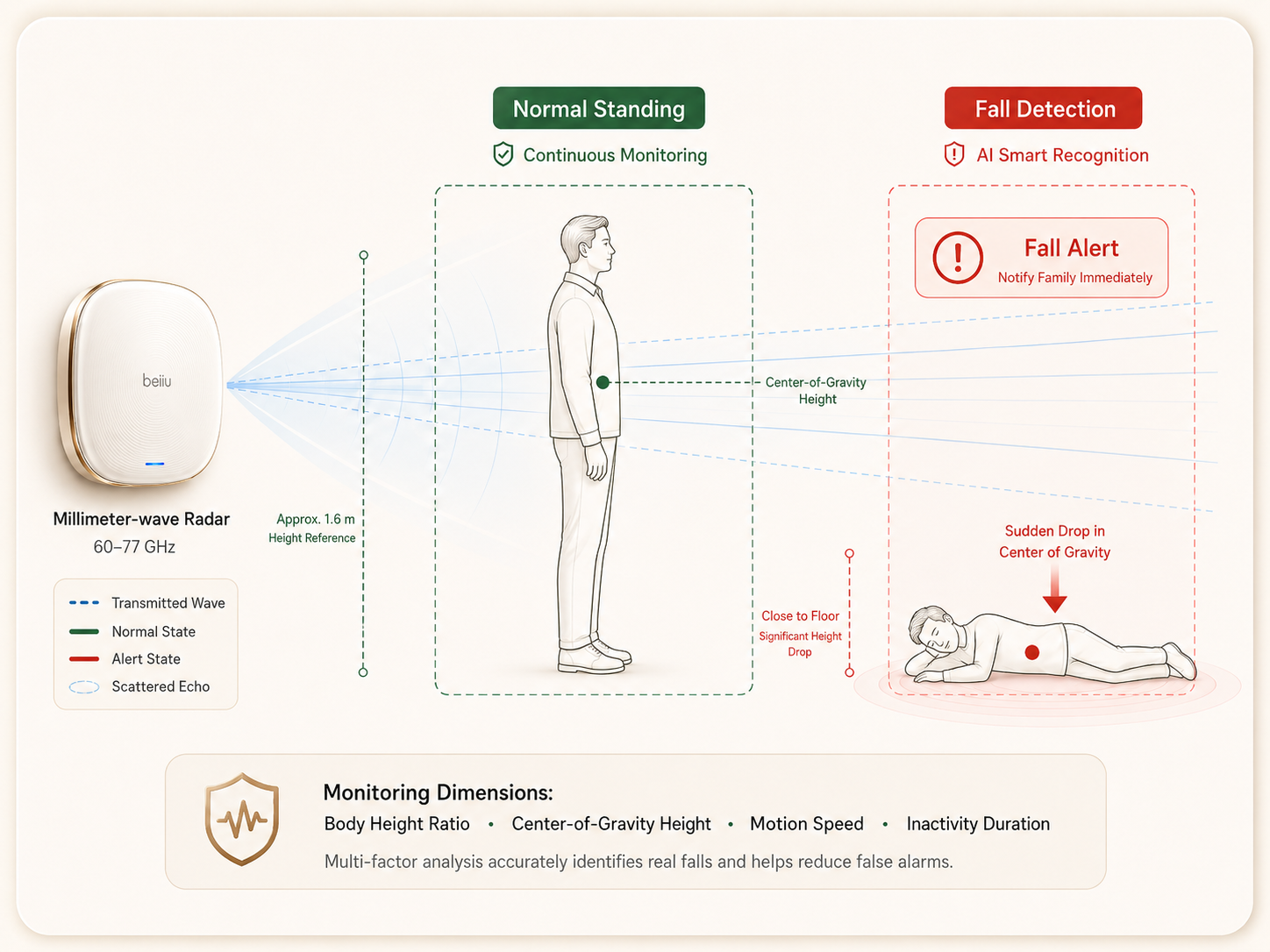
For privacy-sensitive spaces such as bedrooms and bathrooms, we explore low-intrusion protection that does not depend on cameras or continuous wear.
A sensor specification is not enough. Before technology enters a home, it should prove useful in the lived setting, make its status understandable, turn alerts into action and leave a workable handover when it fails.
Begin with a task experienced by older adults and families, then distinguish a frequent difficulty or material risk from a feature that works mainly in demonstrations.
Connectivity, limited coverage, power loss and device faults should be clear so a family never assumes that an unavailable system is still protecting them.
Each alert should explain what changed, how urgent it is, who should confirm it and what can be done next instead of simply transferring anxiety to the family.
Blind spots and faults need a human confirmation route, an alternative method and a path to recovery. High-consequence situations should not depend on one device as the only safeguard.
BEIIU explains product capabilities and intended use clearly. Supportive sensing and alerts do not replace medical diagnosis, professional care or human judgement.
State product capabilities and limits honestly, without unverified absolute claims.
Users should understand whether a product is working and receive clear information when it is not.
Improve through real-world feedback while respecting safety, privacy and personal choice.